
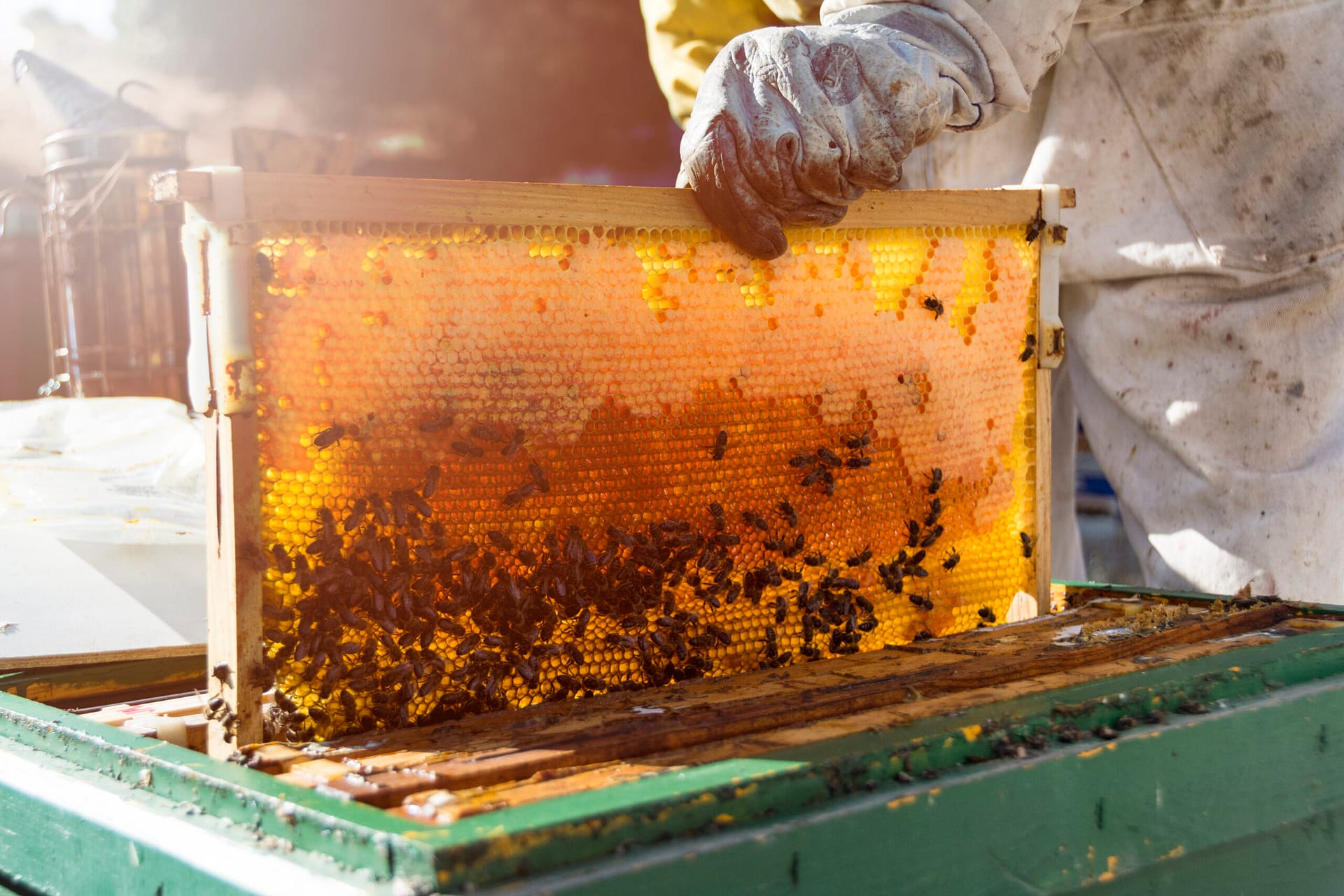
Honey harvesting is a rewarding process that involves removing honey from beehives, extracting it from the combs, processing it for purity, and bottling it for storage or sale. Proper techniques ensure high-quality honey while maintaining the health and productivity of the bees.
1. Preparing for Harvest
Timing:
Harvest honey when the majority of honeycomb cells are capped with wax. This indicates that the moisture level is optimal (approximately 18% or less).
Late summer or early autumn is usually the best time for harvesting, depending on the climate and nectar flow.
Hive Inspection:
Check the hive to ensure the colony is strong and has enough honey left for its own survival.
Leave approximately 15–20 kg of honey in each hive for the bees to overwinter.
2. Extracting Honey
Honey extraction involves removing honey-filled combs from the hive and separating the honey from the combs.
Methods:
Manual Extraction: Use a knife or scraper to remove honey and comb manually. Suitable for small-scale beekeeping.
Honey Extractor: A centrifuge-like device used to spin honey out of the combs.
Steps:
Removing Frames:
Use a smoker to calm bees and gently remove frames containing honey from the hive.
Uncapping the Wax:
Use an uncapping knife or fork to remove the wax seal from honeycomb cells.
Extracting Honey:
Place the frames in a honey extractor and spin to release honey.
For manual extraction, crush the combs and strain the honey through a sieve.
Filtering:
Filter honey to remove debris like wax particles or bee parts.
3. Processing Honey
Processing honey ensures its purity and extends its shelf life.
Steps:
Moisture Content:
Test moisture levels using a refractometer. Honey with moisture above 20% may ferment.
Heating (Optional):
Heat honey gently (below 40°C) to reduce crystallization and improve flow. Avoid overheating to preserve nutrients and flavor.
Filtering:
Filter honey using fine mesh or cloth to achieve clarity.
Settling:
Allow honey to settle in a tank for 24–48 hours to separate air bubbles and impurities.
4. Bottling Honey
Proper bottling preserves honey’s freshness and prepares it for sale or storage.
Steps:
Sterilize Containers:
Use clean, dry, food-grade containers (glass jars or plastic bottles).
Pour Honey:
Carefully pour honey into containers using a funnel to avoid spills.
Sealing:
Seal containers tightly to prevent contamination and moisture absorption.
Labeling:
Add labels with details like honey type, production date, and location.
5. Best Practices for Honey Harvesting
Respect Bee Needs:
Never harvest all the honey; ensure bees have enough for survival.
Work Hygienically:
Maintain cleanliness throughout the process to preserve honey quality.
Quality Testing:
Conduct tests to ensure honey meets industry standards for moisture and purity.
Store Properly:
Store honey in a cool, dry place to prevent crystallization or fermentation.
6. Challenges and Solutions
Challenges:
High moisture content leading to fermentation.
Contamination by debris or pests.
Crystallization during storage.
Solutions:
Use a refractometer to test moisture and a dehumidifier if needed.
Filter honey thoroughly to remove contaminants.
Warm crystallized honey gently to restore flow.
Conclusion
Honey harvesting is a meticulous process that combines skill, timing, and care. By following proper extraction, processing, and bottling techniques, beekeepers can produce high-quality honey while ensuring the health and productivity of their colonies.