
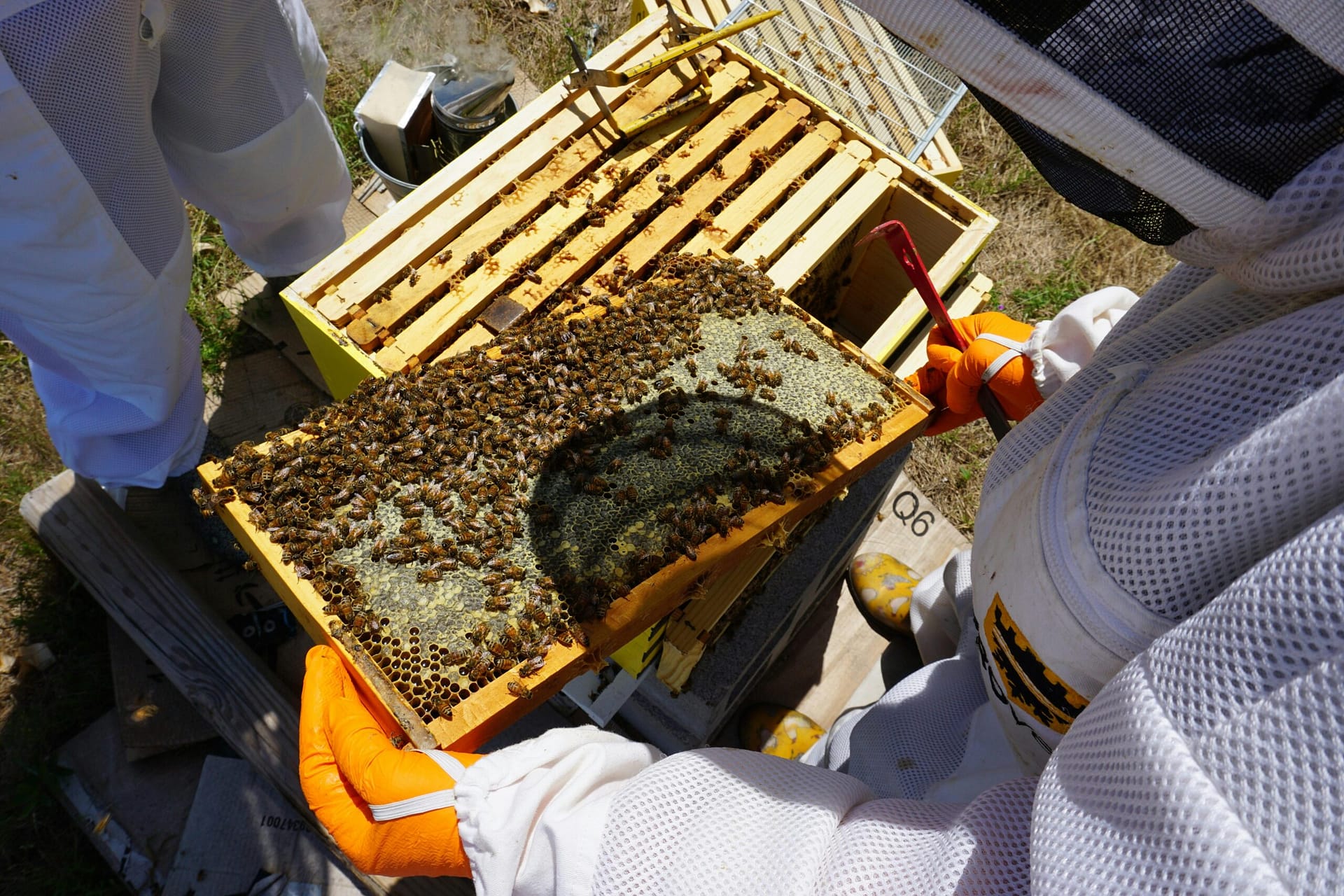
Effective beekeeping requires adapting your practices to the seasonal needs of the colony. By understanding the natural cycle of bees and their environment, you can ensure the health and productivity of your hives throughout the year.
Spring Management
Spring is a critical period for colony growth and preparation for the active season ahead.
Key Activities:
Inspect Hives:
Check for queen activity by observing eggs or larvae.
Assess colony strength and note brood patterns.
Clean and Repair:
Replace damaged frames or hive components.
Remove any debris or dead bees from the hive.
Feed Bees (if Necessary):
Provide sugar syrup if nectar sources are not yet abundant.
Manage Space:
Add extra frames or boxes if the colony is expanding.
Monitor for Swarming:
Identify signs like queen cells and take steps to prevent swarming by adding space or splitting colonies.
Disease and Pest Management:
Treat or monitor for Varroa mites and other potential issues.
Summer Management
Summer is the peak of colony activity, with bees focused on foraging and honey production.
Key Activities:
Regular Inspections:
Monitor hive health and queen productivity.
Ensure proper ventilation to avoid overheating.
Honey Super Management:
Add supers as needed to store surplus honey.
Harvest honey carefully, leaving enough for the bees to survive.
Watch for Pests:
Keep an eye out for hive beetles and wax moths.
Swarm Control:
Continue to monitor and manage swarming behavior.
Provide Water:
Ensure the bees have a nearby water source, especially in hot weather.
Autumn (Fall) Management
Autumn is a time for preparing the colony for winter and ensuring sufficient resources for survival.
Key Activities:
Harvest Honey:
Collect surplus honey while leaving enough for the bees (approximately 15-20kg per hive).
Combine Weak Colonies:
Merge smaller colonies with stronger ones to improve survival rates.
Check for Pests and Diseases:
Treat for Varroa mites or other issues before winter.
Reduce Hive Size:
Remove excess supers and consolidate the hive to retain heat.
Feeding:
Provide sugar syrup or pollen substitutes to supplement food stores if needed.
Winter Management
Winter is a period of minimal activity for bees, as they cluster to conserve heat and survive the cold months.
Key Activities:
Protect from Weather:
Insulate hives and ensure they are sheltered from strong winds and rain.
Monitor Food Stores:
Check hives periodically to ensure adequate honey remains for the bees.
Provide emergency feeding (e.g., sugar patties) if necessary.
Minimize Disturbance:
Avoid opening hives unless absolutely necessary to prevent heat loss.
Pest Control:
Place guards to prevent mice and other predators from entering the hive.
Best Practices Across All Seasons
Keep detailed records of hive inspections, treatments, and observations.
Adapt your management practices to local climate and environmental conditions.
Stay proactive by addressing issues early before they escalate.
By aligning your beekeeping activities with seasonal needs, you can maintain healthy colonies and ensure their long-term success.