
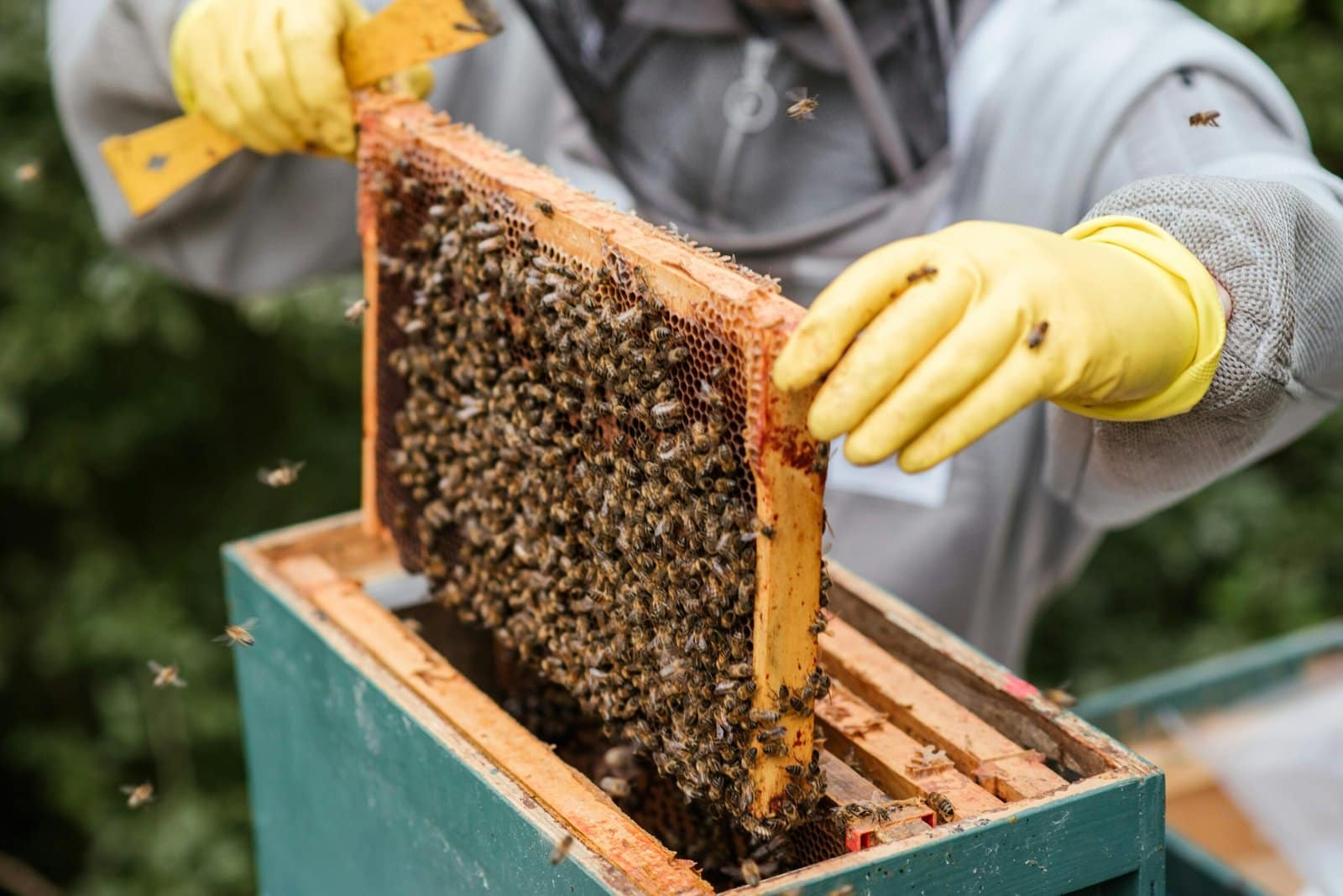
Proper hive maintenance is critical for ensuring the health of the honeybee colony and promoting successful beekeeping. Regular inspections and upkeep help identify potential issues early and keep the bees thriving.
1. Regular Hive Inspections
Inspections are the cornerstone of hive maintenance. They provide valuable insights into the health and productivity of the colony.
Frequency of Inspections:
Conduct inspections every 7–10 days during active seasons (spring and summer).
Reduce inspections in colder months to avoid disrupting the bees’ winter cluster.
Inspection Goals:
Check for Queen Presence: Look for the queen herself, eggs, or young larvae, as these indicate the queen is healthy and active.
Monitor Brood Pattern: Healthy brood patterns show evenly distributed eggs, larvae, and capped cells.
Assess Food Stores: Check for sufficient nectar, honey, and pollen reserves.
Inspect for Diseases and Pests: Look for symptoms of common issues like Varroa mites, wax moths, or foulbrood.
Observe Bee Behavior: Calm and focused activity suggests a healthy colony, while excessive aggression or lethargy may indicate problems.
Evaluate Space Needs: Ensure the hive has enough room to prevent overcrowding, which can lead to swarming.
Inspection Tools:
Bee Smoker: Used to calm the bees before opening the hive.
Hive Tool: Helps in prying apart hive components and scraping debris.
Protective Gear: Always wear a bee suit, gloves, and veil for safety.
2. Cleaning and Maintenance
Maintaining cleanliness and proper conditions in the hive is essential for colony health.
Steps for Maintenance:
Remove Debris: Clean out dead bees, wax, or dirt from the bottom board.
Replace Damaged Frames: Repair or replace broken frames to prevent comb collapse.
Check for Comb Health: Remove old or misshapen comb and encourage bees to build new ones.
Inspect Ventilation: Ensure proper air circulation to prevent mold or moisture buildup.
Protect Against Pests: Use guards or traps for pests like ants or hive beetles.
Repaint or Treat Wooden Components: Protect the hive exterior from weathering by applying non-toxic paint or sealant.
3. Seasonal Maintenance
Hive management tasks vary throughout the year based on the bees’ needs.
Spring:
Inspect for brood growth and expand the hive if necessary.
Check for winter damage and repair hive components.
Monitor for swarming behavior and take preventive measures.
Summer:
Ensure adequate ventilation during hot weather.
Add honey supers to accommodate increased nectar flow.
Autumn:
Harvest honey and leave enough for the bees to overwinter.
Combine weak colonies with strong ones to improve survival chances.
Winter:
Reduce hive disturbances to prevent heat loss.
Insulate hives and protect them from strong winds and predators.
4. Monitoring and Record-Keeping
Keeping track of hive conditions and maintenance activities is crucial for long-term success.
What to Record:
Queen activity and brood patterns.
Food stores and feeding interventions.
Signs of disease, pests, or unusual behavior.
Weather conditions during inspections.
Benefits of Record-Keeping:
Helps identify trends or recurring issues.
Aids in planning for future hive expansions or improvements.
Provides a reference for troubleshooting problems.
Best Practices for Hive Maintenance
Always be gentle to avoid stressing the bees during inspections.
Work quickly but carefully to minimize time with the hive open.
Avoid inspecting the hive during adverse weather conditions, like rain or high winds.
By conducting regular inspections, cleaning, and seasonal adjustments, you ensure a healthy and productive bee colony.